How to Improve Machining Cutting Techniques for Better Results?
Machining cutting is a vital process in manufacturing. It determines the quality and precision of the final product. Yet, many professionals face challenges in achieving optimal results. Factors like tool selection, cutting speeds, and feed rates greatly influence outcomes.
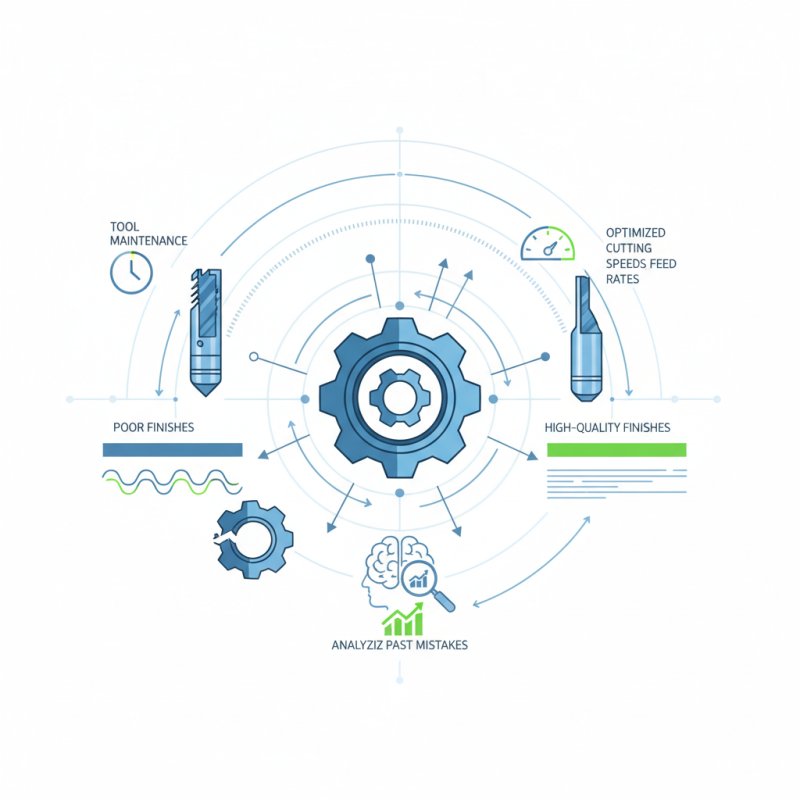
Improving machining cutting techniques is essential. Many overlook the importance of tool maintenance. A dull tool can lead to poor finishes. Moreover, incorrect cutting parameters can increase wear on equipment. It's crucial to pay attention to these details for better efficiency.
In this journey of improvement, it’s important to reflect on past mistakes. Analyzing previous outcomes can reveal insights. Often, minor adjustments can lead to significant enhancements. Embracing a mindset of continuous improvement will pave the way for success in machining cutting.
Assessment of Current Machining Cutting Techniques for Effectiveness
Assessing current machining cutting techniques reveals both strengths and weaknesses. Recent industry reports show that traditional methods provide consistent results, yet they lack flexibility for modern manufacturing demands. In fact, studies indicate that around 30% of machining operations still rely on outdated techniques. This stagnation can hinder productivity and lead to suboptimal outcomes.
Moreover, many manufacturers struggle with tool wear and heat management. Data suggests that effective cutting speeds are often miscalculated, leading to inefficient energy usage. Approximately 40% of machining processes exhibit thermal issues that significantly affect precision. This calls for an urgent reevaluation of current strategies.
Improving these techniques means embracing innovative technologies like adaptive machining. Industry experts emphasize a shift towards data-driven processes. However, the transition can pose challenges. Many facilities lack the infrastructure to support advanced systems. Addressing these gaps is critical for achieving better results and enhancing operational efficiency.
How to Improve Machining Cutting Techniques for Better Results?
| Technique |
Effectiveness Rating (1-10) |
Cost (%) |
Material Removal Rate (mm³/min) |
Surface Finish Quality |
| Conventional Milling |
7 |
20% |
500 |
Good |
| High-Speed Machining |
9 |
30% |
1200 |
Excellent |
| Electrical Discharge Machining (EDM) |
8 |
40% |
300 |
Very Good |
| Laser Cutting |
8 |
25% |
800 |
Excellent |
| Waterjet Cutting |
7 |
35% |
600 |
Good |
Exploring Advanced Tool Materials and Geometries for Enhanced Cutting
In modern machining, cutting tools are crucial for efficiency and precision. Advanced tool materials like carbide and ceramic have transformed cutting techniques. According to industry reports, carbide tools can last up to five times longer than traditional high-speed steel tools. They withstand higher temperatures and abrasive materials. This longevity directly impacts production cost and time.
Tool geometry plays an equally vital role. Different angles and shapes can significantly affect cutting performance. A report indicates that optimized geometries can improve chip removal and surface finish. However, achieving the right balance between tool life and performance is often a challenge. Some machinists might not fully understand the potential benefits of adjusting tool geometry for specific materials.
Experimentation is necessary. There is no one-size-fits-all solution. Each machining operation may require different tools and geometries. Some may find that their current setups do not maximize efficiency. Reflecting on past machining failures can lead to valuable insights. Understanding the interplay between tool material and geometry is essential for improvement in machining techniques.
Optimizing Cutting Parameters: Speed, Feed Rate, and Depth of Cut
Optimizing cutting parameters is crucial for enhancing machining techniques. Specific adjustments to speed, feed rate, and depth of cut can lead to significant improvements in product quality and production efficiency. Finding the right cutting speed is essential. Too fast can cause overheating, while too slow may reduce productivity. For many materials, testing various speeds can pinpoint the sweet spot.
The feed rate also plays an important role. A higher feed rate may increase productivity, but it risks compromising the finish. Conversely, a lower feed rate can improve surface quality, yet it may lead to longer cycle times. Balancing these factors can be challenging. It often requires trial and error. Many machinists underestimate this balance, leading to suboptimal results.
Depth of cut is another critical parameter. A deeper cut removes more material quickly but can strain the tool and machine. Shallower cuts are gentler, offering better surface finish but can slow down progress. Reflecting on your experiences is key. Analyze past projects. Identify what worked and what didn’t. Adjusting these parameters based on experience and material type is essential for continuous improvement.
Implementing Real-time Monitoring and Feedback Systems in Machining
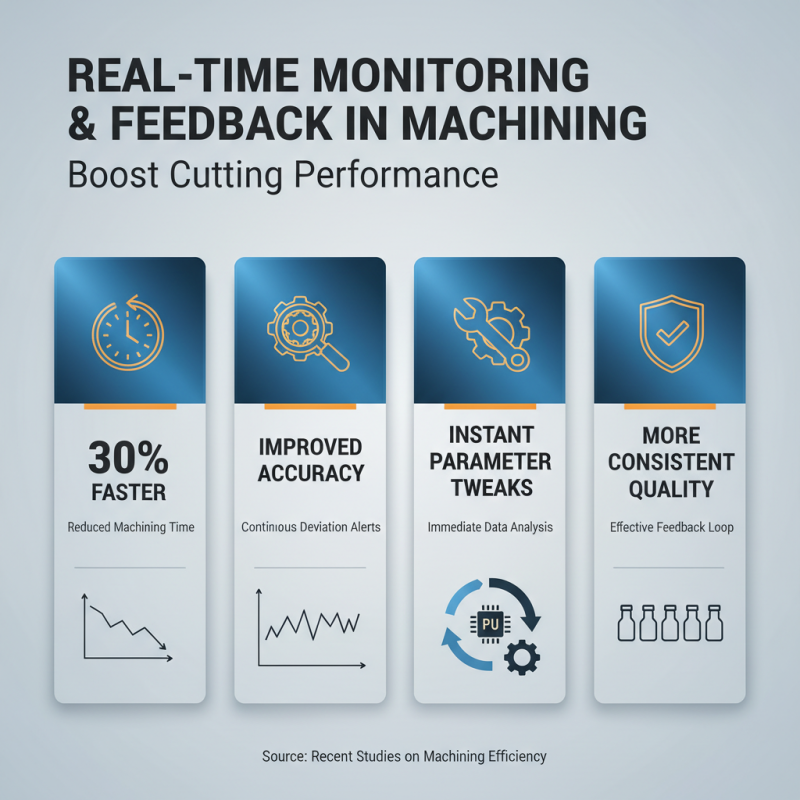
Implementing real-time monitoring and feedback systems in machining can significantly enhance cutting techniques. Recent studies indicate that such systems can reduce machining time by up to 30%. This reduction is achieved through immediate data collection and analysis. Accuracy improves when machines are monitored continuously, alerting operators to deviations. Effective feedback helps in tweaking parameters instantly, which can lead to more consistent quality.
Additionally, integrating these systems allows for better resource management. For example, companies report a 20% reduction in material waste. Operators can adjust tooling based on real-time data, which minimizes errors. However, implementing this technology does come with challenges. Not all operators are trained to interpret the data effectively. Without proper training, the potential benefits may not be realized.
Moreover, investment costs can be high. Some manufacturers hesitate to adopt these systems due to initial expenses. This reluctance can lead to lost opportunities for efficiency gains. As the industry evolves, addressing these concerns will be crucial for maximizing the advantages of real-time monitoring.
Training and Skill Development for Operators to Improve Cutting Techniques
Operators play a crucial role in machining processes. Their skills directly impact cutting techniques and, ultimately, production efficiency. A recent study by the National Institute of Standards and Technology (NIST) revealed that proper training can improve cutting performance by over 30%. Investing in operator training not only enhances skill sets but also reduces errors.
Hands-on training sessions allow operators to practice new techniques. Simulation-based training is gaining traction. This method helps in visualizing cuts and understanding material responses. According to a report from the Society of Manufacturing Engineers (SME), companies that adopt simulation report a 20% increase in productivity. However, many operators still lack access to advanced training programs.
Additionally, ongoing skill development is vital. Regular workshops and refresher courses can be beneficial. Operators often face challenges with machine setups and tool selection. A survey indicated that 40% of operators feel unprepared for complex machining tasks. This gap in preparation can lead to production delays and increased material waste. Addressing these training needs is essential for improving cutting techniques and achieving better machining results.