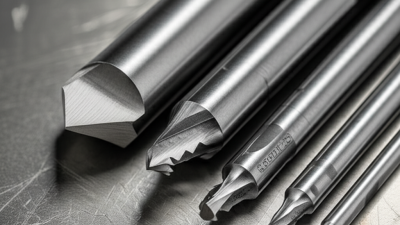
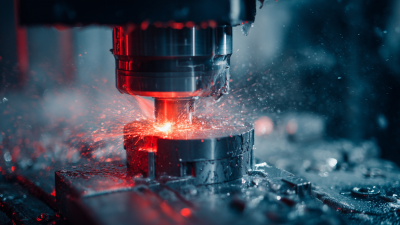
Hss Punches Best Uses Benefits and Types Explained?
HSS punches are essential tools in various industries, particularly in metalworking and manufacturing. These punches are made from high-speed steel, offering durability and precision. According to recent industry reports, HSS punches significantly improve productivity and reduce waste. The right punch can lead to a 30% increase in efficiency.
In applications like sheet metal fabrication, using HSS punches results in cleaner cuts and less rework. Data suggests that using quality punches decreases downtime caused by tool failures. However, there can be challenges in selecting the appropriate type for specific tasks. Each project may require a different punch size or design, and not all punches are created equal.
In the quest for optimal performance, users must consider various factors like hardness and heat treatment of HSS punches. Ignoring these factors may lead to unexpected results. The importance of selecting the right tool cannot be overstated. Understanding the benefits and types of HSS punches can guide users toward better outcomes.
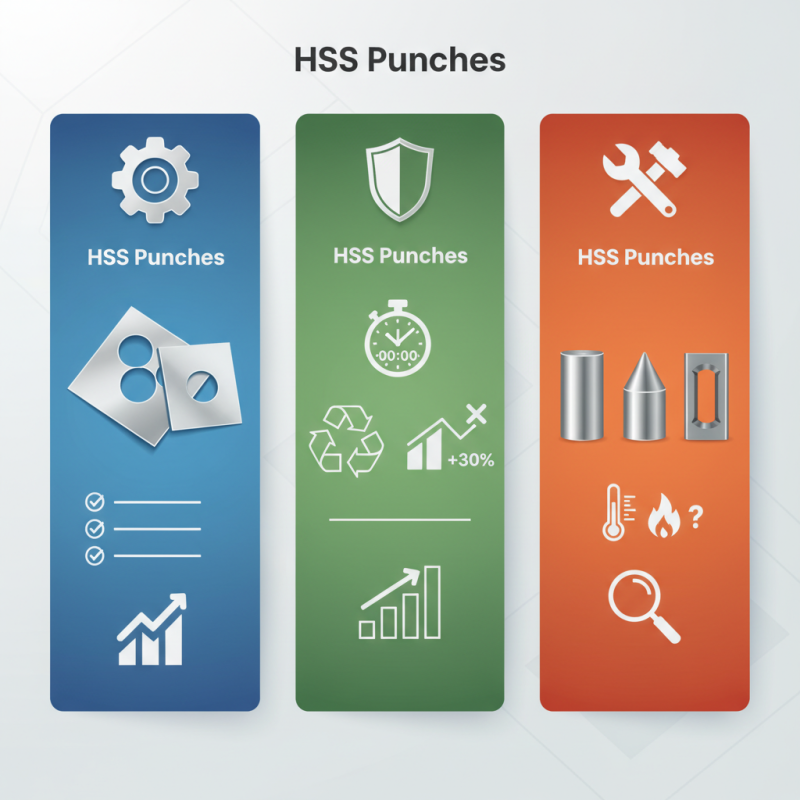
HSS Punches: An Overview of High-Speed Steel Tools
High-speed steel (HSS) punches are essential tools in various industries. They are known for their durability and cutting efficiency. An analysis by the Manufacturing Institute showed that tools made from HSS can increase productivity by up to 30%. This is relevant for fabricators and metalworkers who require precision in their tasks.
When comparing different materials for punches, HSS stands out. It remains strong at high temperatures and reduces wear during extensive use. Manufacturers have reported a longer lifespan for HSS tools, with performance lasting up to 50% longer than traditional steel. Nonetheless, maintenance is crucial. Over time, even HSS punches can lose their edge, necessitating regular sharpening and care.
In specific applications, HSS punches shine brightly. Their ability to create clean holes in tough materials is unmatched. Case studies revealed that using HSS punches increased efficiency for projects like automotive part manufacturing. While HSS punches offer many benefits, they may not always be the right choice for every application. Cost considerations and specific project requirements should always be thoroughly assessed.
Understanding the Best Uses of HSS Punches in Various Industries
HSS punches are essential tools in various industries. Their primary role is to create precise holes in materials like metals, plastics, and composites. In manufacturing, for example, HSS punches ensure accuracy when forming components. They help in creating distinct shapes that meet specific engineering needs.
In the automotive industry, these punches are crucial. They are used to design parts with exact tolerances. However, improper use can lead to material wastage or damage to the punch itself. Understanding the right application is vital. Similarly, in electronics, HSS punches help in creating intricate designs for circuit boards. Their precision is necessary for functional assembly.
Training staff in the correct use of HSS punches can prevent costly mistakes. Operators need to understand the limitations and capabilities of these tools. Overconfidence can lead to errors. Therefore, regular assessments and adjustments can improve productivity. Emphasizing skill development is key to mastering HSS punch usage across different sectors.
Key Benefits of Using HSS Punches for Precision Work
HSS punches, made from high-speed steel, are essential tools for precision work. They offer durability and efficiency in various applications. These punches can create holes in metals, plastics, and wood with remarkable accuracy. Their sharp edges facilitate clean cuts, reducing the need for secondary processing. This aspect alone makes them a favorite among machinists and craftspeople.
One key benefit of using HSS punches is their ability to withstand high temperatures. This capability allows them to perform consistently, even during extended usage. Additionally, the punches are relatively easy to sharpen, which extends their life. However, using them requires careful handling. Improper alignment can lead to poor-quality holes. Mistakes may produce uneven edges, demanding extra time for corrections.
Another noteworthy feature is their versatility. HSS punches come in various sizes and shapes, accommodating different needs. From making small pilot holes to larger diameter cuts, they adapt easily. Yet, not all projects may require HSS punches. In some cases, materials might be better suited for other tools. Analyzing each project is vital for optimal results.
Different Types of HSS Punches and Their Specific Applications
HSS punches, made from high-speed steel, are essential tools in various applications. They excel in creating holes in materials like metal, plastic, and wood. Different types of HSS punches cater to specific needs, enhancing efficiency in the production process. For instance, standard HSS punches are perfect for general applications, while step and progressive punches are better suited for complex tasks.
In industries, hollow punches are widely used for shaping materials. Their design helps achieve clean cuts. According to a recent industry report, using the right punch can increase productivity by up to 30%. This is crucial for businesses aiming to reduce waste and improve output quality.
Tips: Choose the appropriate type of punch according to the material. This ensures durability and precision. Regular maintenance of tools is vital to maintain their effectiveness. Many overlook this aspect, leading to inefficiencies. Understanding the purpose of each type helps avoid costly mistakes.
Maintenance Tips for Extending the Life of HSS Punches
To extend the life of HSS punches, regular maintenance is crucial. Studies indicate that proper cleaning after each use can enhance their lifespan by 30%. Residual materials can cause premature wear. A simple rinse in a solvent can work wonders. It's easy to overlook this step, yet neglecting it can lead to costly replacements.
Another effective practice involves routine inspection. Check for signs of wear or chipping regularly. Identifying these issues early can save time and money. Reports suggest that punch degradation is often gradual. Users sometimes ignore minor defects, leading to major failures. Consider inspecting the punches every few months depending on usage frequency.
Storing HSS punches correctly is also important. Store them in a dry, protected container to avoid rust. Moisture exposure can decrease cutting efficiency. Industry statistics show that improper storage can cut tool life by 50%. While the immediate effort may seem minor, the long-term benefits are clear. It’s about building a sustainable practice for tool management.