How to Choose the Right Precision Machining Part for Your Project?
Selecting the right Precision Machining Part for a project is crucial for success. The global precision machining market is expected to reach $530 billion by 2026, emphasizing its importance in various industries, including aerospace and automotive. Precision parts play a key role in ensuring the efficiency and performance of machinery.
In recent years, the demand for high-quality precision parts has surged. Manufacturers must choose suppliers that meet certain qualifications, such as ISO and CE certifications. With the advent of AI technologies, sourcing precision machining parts is becoming easier, yet challenges remain. Not all suppliers offer the same quality, and some may lack transparency.
It's vital to conduct thorough research before finalizing a supplier. Look for customer reviews and case studies that showcase their experience. Even with the best tools at hand, a project can falter without the right connections. Reflecting on past difficulties in supplier selection can guide better choices in the future. Precision in choice leads to precision in outcome.
Understanding Precision Machining Parts and Their Applications
Precision machining parts are vital in many industries. They play a critical role in aerospace, automotive, and medical applications. Understanding these components can help in selecting the right ones for your projects. Precision machining allows for creating complex shapes with high accuracy. Each part serves a specific function.
Applications of precision parts vary greatly. For instance, aerospace components must meet strict regulations. They often require lightweight yet durable materials. On the other hand, medical devices need parts that are not only precise but also biocompatible. The complexity of these parts can be daunting. Choosing the wrong component may lead to project failure.
It’s essential to consider your project's requirements. Analyze factors such as tolerance levels and material types. Sometimes, a simple design may outperform a complex one. Each choice carries its own risks. Assessing these details can save time and resources in the long run. After all, even minor imperfections can cause significant problems. Balancing precision with practicality might require some reflection.
Assessing Material Compatibility for Your Project Requirements
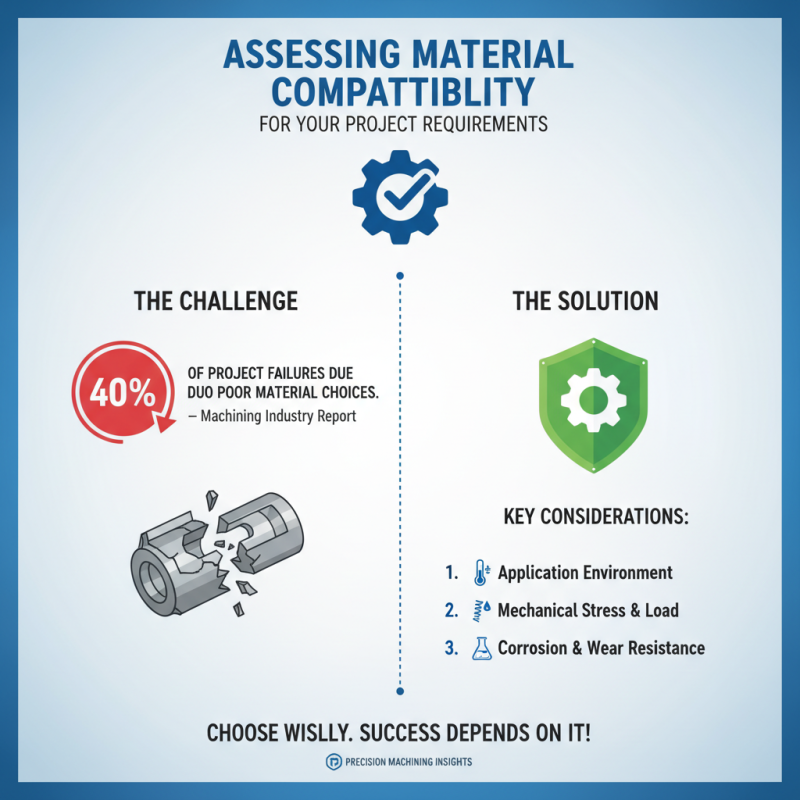
Choosing the right precision machining part requires careful consideration of material compatibility. Materials must align with specific project requirements. For example, the Machining Industry reports that 40% of project failures stem from poor material choices. This highlights the importance of selecting the right materials.
Different materials have unique characteristics. Aluminum is lightweight and corrosion-resistant, making it suitable for various applications. Stainless steel offers strength and durability, essential for high-stress environments. On the other hand, plastic parts can simplify manufacturing processes but may lack strength. Each choice impacts project outcomes.
**Tip**: Always analyze the environment where the part will function. Temperature extremes or exposure to chemicals can degrade some materials.
In the aerospace sector, nearly 30% of projects fail due to material incompatibility. Precision machining requires a thoughtful approach. Review your project requirements rigorously. Don't overlook the small details; they can lead to substantial setbacks. Sometimes, essential information about material properties may not be readily available.
**Tip**: Consult with an expert or use comprehensive databases to verify material properties. This reduces uncertainty and enhances project success.
Evaluating Tolerances and Specifications for Precision Parts
When selecting precision machining parts, evaluating tolerances is crucial. Tolerances define the acceptable limits of variation in a part's dimensions. Too tight of a tolerance can increase costs. However, too loose might compromise performance. Finding the right balance is key.
Specifications guide the manufacturing process. They include material type, finish, and other critical details. For instance, different materials react differently under stress. Some may expand or contract with temperature changes. This can affect assembly and functionality. Keep in mind that a cheap part with vague specifications may lead to issues later.
In many cases, prototypes help in understanding precision requirements. Testing allows you to evaluate fit and function before mass production. Yet, rushing this phase might overlook subtle flaws. It's essential to reflect on every detail during evaluation. Precision isn't just about numbers; it's about the entire assembly's integrity.
Choosing the Right Manufacturing Process for Machining Parts
Choosing the right manufacturing process for machining parts can seem daunting. Different processes offer unique benefits and drawbacks. For instance, CNC machining allows for intricate designs and tight tolerances. However, it may be more expensive and time-consuming compared to simpler methods. Balancing cost and quality is crucial.
Another common option is manual machining. This process offers flexibility and may be suitable for small production runs. Yet, it can lead to inconsistencies in quality, especially with complex parts. You must evaluate the specific requirements of your project. Consider factors such as part complexity, volume, and material type.
Each option has its strengths and weaknesses. Understanding these can help in making informed decisions. For example, laser cutting is precise but not ideal for all materials. 3D printing offers quick prototyping but might lack durability. Evaluate your choices carefully to ensure the best outcome for your project.
Cost Considerations and Supplier Selection for Precision Components
When considering precision components for your project, cost is a vital aspect. Budgets can vary significantly based on material and complexity. High-end materials might promise durability but can also inflate costs unexpectedly. Finding the right balance between quality and budget requires careful thought.
Supplier selection is equally crucial. A reliable supplier often signifies consistent quality. However, newer companies may offer attractive prices. This could lead to risks. Evaluate the supplier's experience and past projects. Look for testimonials, but be aware that not all reviews reflect reality. A supplier’s responsiveness and ability to understand your needs are just as important. Each aspect can impact the overall success of your project.
Lastly, remember that rushing your decisions might result in regrets later. Precision machining requires attention to detail. Sometimes, less-known suppliers can surprise you. Conversely, well-known names might not always deliver the best value. Exploring all options is key. Trust your instincts, but validate them with thorough research.
How to Choose the Right Precision Machining Part for Your Project? - Cost Considerations and Supplier Selection for Precision Components
| Part Type |
Material |
Size (mm) |
Unit Cost ($) |
Lead Time (weeks) |
Supplier Rating |
| Gear |
Aluminum 6061 |
50 |
15.00 |
4 |
4.5/5 |
| Bracket |
Stainless Steel 304 |
75 |
30.00 |
6 |
4.0/5 |
| Housing |
Plastic ABS |
100 |
10.00 |
2 |
4.8/5 |
| Shaft |
Carbon Steel |
150 |
25.00 |
5 |
4.3/5 |
| Cover |
Polycarbonate |
120 |
12.00 |
3 |
4.6/5 |