How to Choose the Right Edm Parts for Your Project?
When selecting the right EDM parts for your project, it is crucial to make informed decisions. The right components can significantly affect the performance and efficiency of your EDM machine. Ignoring the specific needs of your project may lead to unexpected issues.
EDM parts vary in quality, size, and functionality. It is vital to understand how each part contributes to the overall process. For example, choosing the wrong electrode material can compromise precision. The market offers numerous options, which can be overwhelming.
Reflecting on your project requirements is essential. Are you focusing on speed, accuracy, or cost-efficiency? Balancing these factors is not always easy. Engaging with experienced professionals can provide valuable insights. Ultimately, taking the time to choose the right EDM parts will lead to a more successful outcome.
Understanding the Basics of EDM Parts and Their Functions
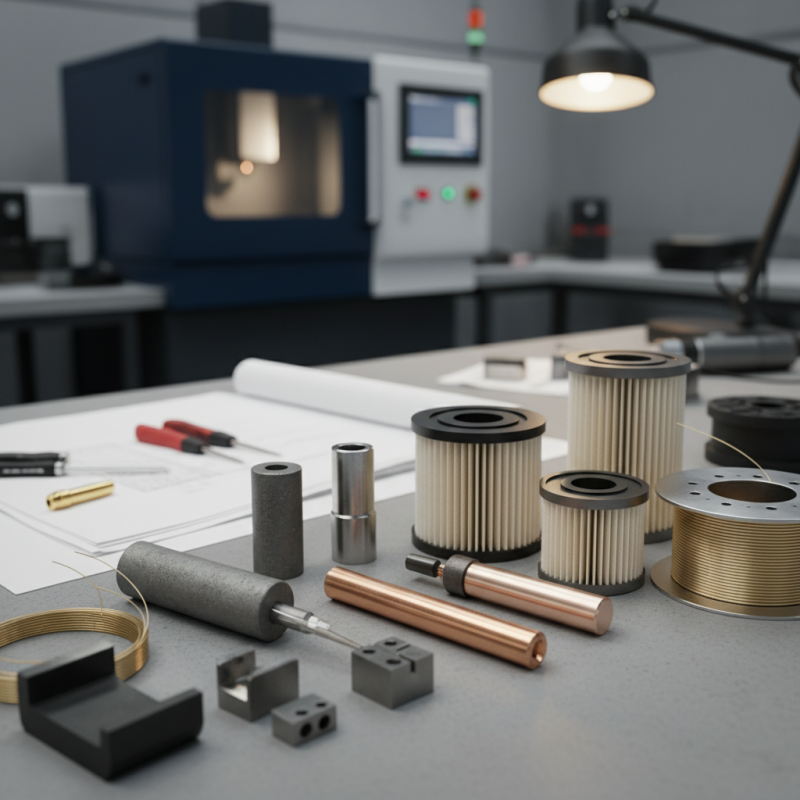
When working with EDM (Electrical Discharge Machining) parts, understanding their functions is essential. EDM parts play a crucial role in precision machining. These components include electrodes, power supplies, and dielectric fluids. Each part contributes to the overall performance of the EDM process. According to a recent industry report, around 70% of machining defects are linked to ineffective part selection. This highlights the importance of choosing the right elements for your project.
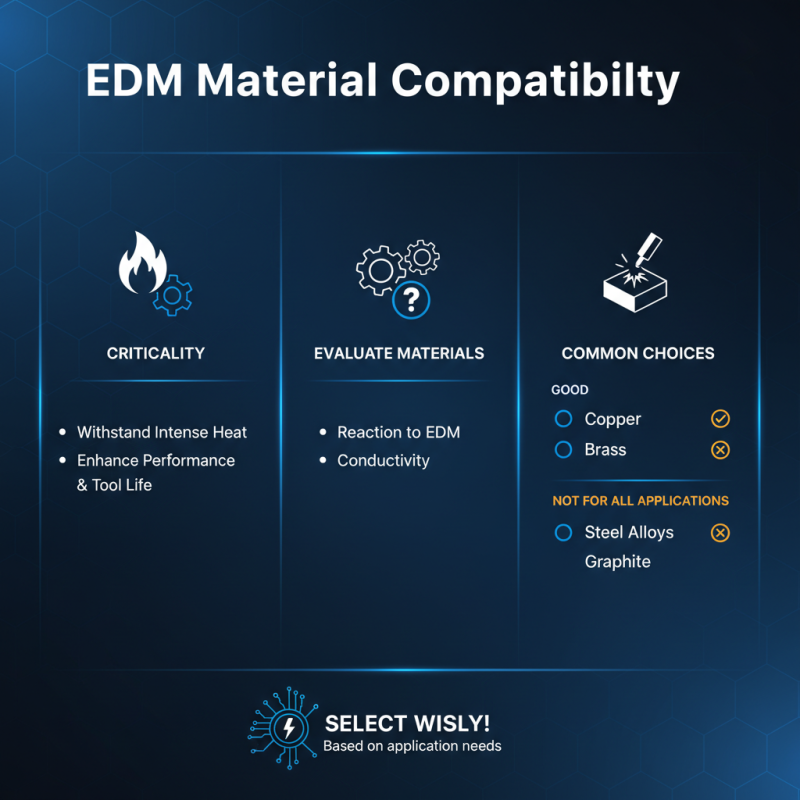
Electrodes must be carefully selected based on material and shape. Copper and graphite are common choices, each offering unique benefits. For instance, copper provides better thermal conductivity, while graphite is advantageous for intricate designs. The wrong electrode can lead to inefficiencies and increased production costs. The optimal choice can enhance machining speed and accuracy, factors that can directly affect your project timeline.
Power supplies also have a significant impact on EDM performance. They regulate the energy that creates sparks between the electrode and workpiece, determining stability and consistency. Reports indicate that nearly 50% of EDM users experience issues due to subpar power supplies. Understanding how these components interact is crucial. A misplaced focus on cheap parts can result in costly mistakes. Instead, investing time in research will yield better outcomes.
How to Choose the Right EDM Parts for Your Project?
| Part Name |
Function |
Material |
Compatibility |
Price Range |
| Electrode |
Conducts electrical discharges |
Copper, Graphite |
Universal |
$20 - $100 |
| Dielectric Fluid |
Insulates and cools the process |
Mineral Oil, Synthetic |
Water-Soluble |
$10 - $50 per liter |
| Guides |
Keeps electrodes aligned |
Steel, Brass |
Compatible with most EDM machines |
$30 - $150 |
| Power Supply Unit |
Provides electrical energy |
Metal, Plastic |
Specific to machine models |
$500 - $2000 |
| Control Software |
Manages machining parameters |
Software (Various Platforms) |
PC Compatible |
$100 - $1000 |
Identifying the Key Requirements for Your EDM Project
Choosing the right EDM parts involves careful consideration of your project’s key requirements. Start by defining your project's goals.
Are you focusing on precision or speed? These factors will dictate the type of components you need.
Identify the materials you will be working with. Different materials require specific EDM techniques and parts.
Next, consider the size and scale of your project. Smaller projects may need compact parts, while larger tasks could require robust equipment.
Evaluate your budget. Quality parts can be expensive, but they can prevent future issues. Additionally, it's important to assess the compatibility of all components.
A mismatch can lead to costly delays and frustrations.
Lastly, review any previous projects. Are there aspects that didn’t work well? Reflecting on past experiences can help refine your choices.
Be open to learning from mistakes, as this process can be just as valuable as any successful outcome.
Look for help if needed. Consulting with experts can provide valuable insights and advice tailored to your specific needs.
Comparing Different EDM Technologies and Their Parts
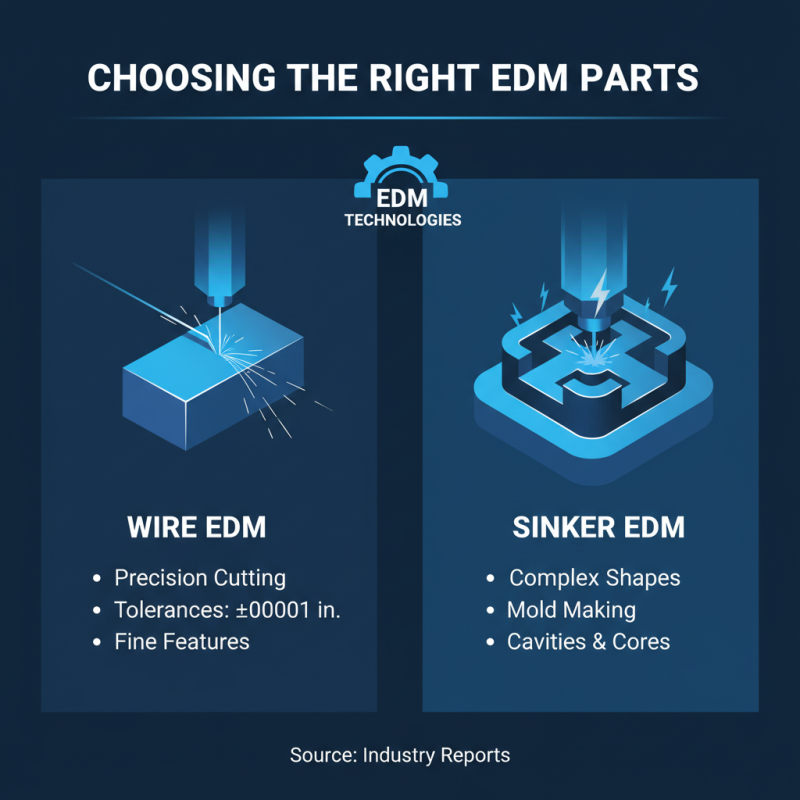
Choosing the right EDM parts begins with understanding the different EDM technologies available. Electrical Discharge Machining (EDM) encompasses several techniques, including both Wire EDM and Sinker EDM. According to industry reports, Wire EDM is often praised for its precision, achieving tolerances as tight as ±0.0001 inches. In contrast, Sinker EDM is better suited for producing complex shapes, making it invaluable in mold making.
When selecting EDM parts, consider the electrode material. Copper and graphite are two popular choices, each with its pros and cons. Copper offers excellent conductivity but wears faster. Graphite, on the other hand, has a longer life but can be harder to machine.
Tips: Evaluate the specific requirements of your project. Ensure that you choose parts that complement your EDM machine's capabilities. Pay attention to the dielectric fluid too. It affects both the machining quality and tool life.
While it's essential to choose quality components, price is a significant factor. Remember that not every high-priced part guarantees better performance. Sometimes, simpler alternatives might perform just as well. Prioritize quality over branding to maximize efficiency.
Budgeting for EDM Parts: Cost Considerations and Sourcing Tips
When budgeting for EDM parts, it's crucial to know your limits. Set a realistic budget that reflects your project's needs. This usually means balancing quality with cost. Cheaper parts may save money initially, but they can compromise performance. Always assess whether budget-friendly options meet your standards.
Sourcing tips can help you get more value. Look for local suppliers to reduce shipping costs. Don't overlook used or refurbished parts; they can be cost-effective. Verify their condition and performance history. Consider bulk purchasing if you plan multiple projects. It might seem risky, but it can lead to significant savings.
Consider the importance of . Investing a bit more now can prevent future expenses. Research your options deeply. Mistakes happen if you rush. Track all expenses carefully, as hidden costs can pile up. Reflect on each decision to ensure you're making the best choice for your project, even if it means revisiting your budget frequently.